
A photo project spanning multiple years, exploring over ten pristine, slot canyons in Australia’s Blue Mountains in New South Wales.
The beautiful slot canyons in the Blue Mountains are long, narrow channels that have been etched out over many years, as water moved through the landscape.
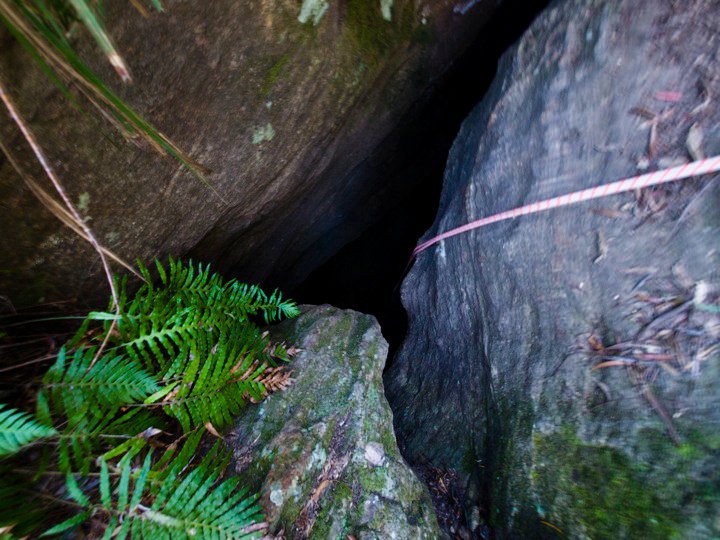
Canyoning (or canyoneering as it is known in the US) involves travelling through canyons, and typically involves abseiling down canyon walls, rock climbing, sliding, swimming and trekking. Many wet canyons in the Blue Mountains were not explored until progressively more modern climbing ropes and equipment were adopted. The wet environment, high humidity and low light have traditionally made canyons very difficult to photograph.
During Australia’s summer and autumn seasons, I was fortunate to explore this world beneath with an adventurous, daring, and amazing group of friends, that truly left a mark on me. I hope these delicate, and truly inspiring canyons can be sustained in future.
These photos were (painfully) taken with any photographic device that could survive the journey! I learnt how challenging it was to capture photos in wet and dark environments, while climbing, swimming and abseiling through canyons. I destroyed two cameras from water damage, including an early version of the GoPro that fell off my head while jumping into a swimming hole! In the end I had most success with a compact DSLR, wrapped in a towel, packed into a dry bag with a portable tripod.
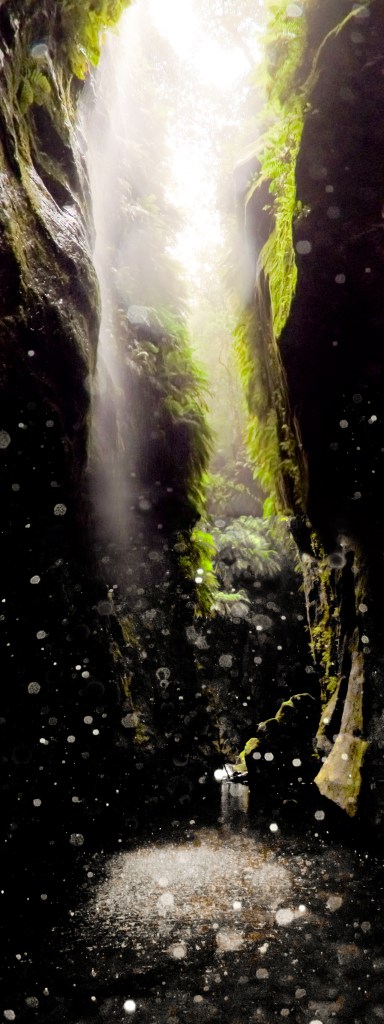
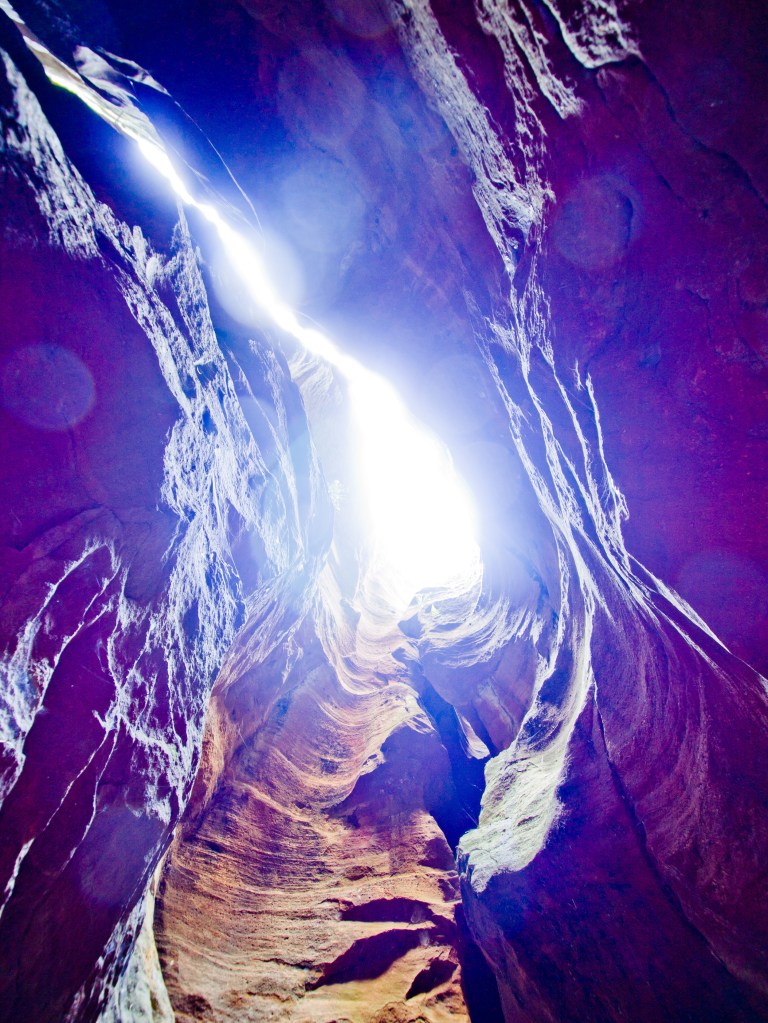
Some canyons may be wet, dry or a combination of the two. The walls down below are cold to touch as the sun only illuminates sections of the walls.
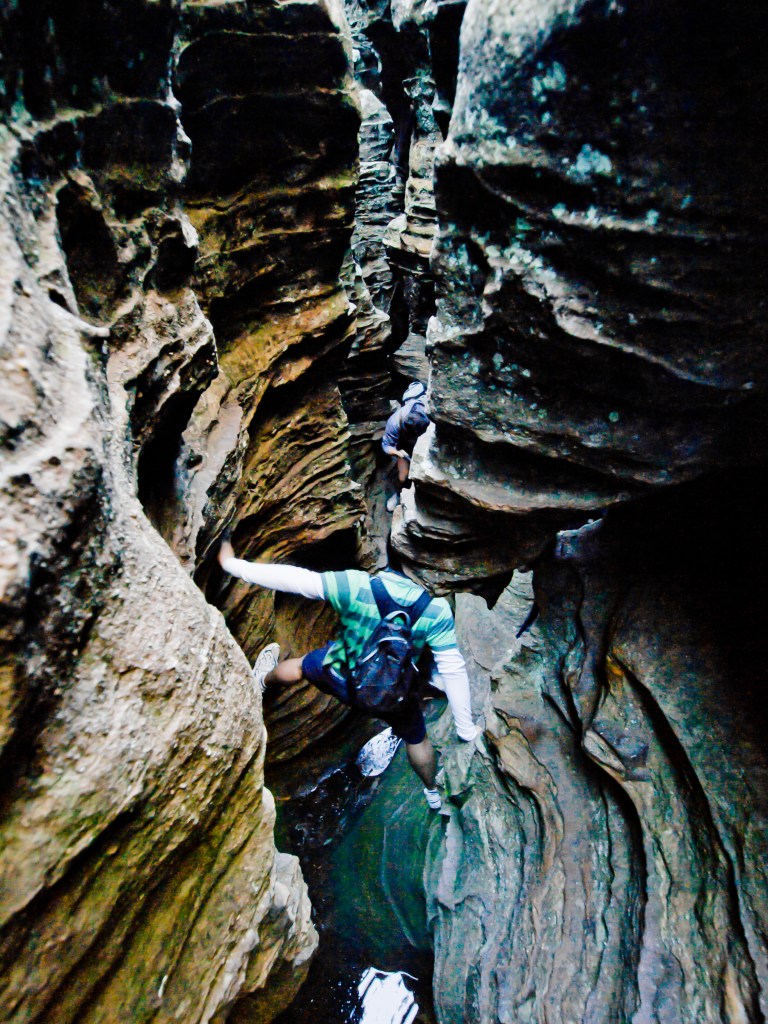
Various rock climbing techniques are needed in different situations. Between two walls, one might need to “chimney” or “bridge” as seen here in Tiger Snake Canyon.
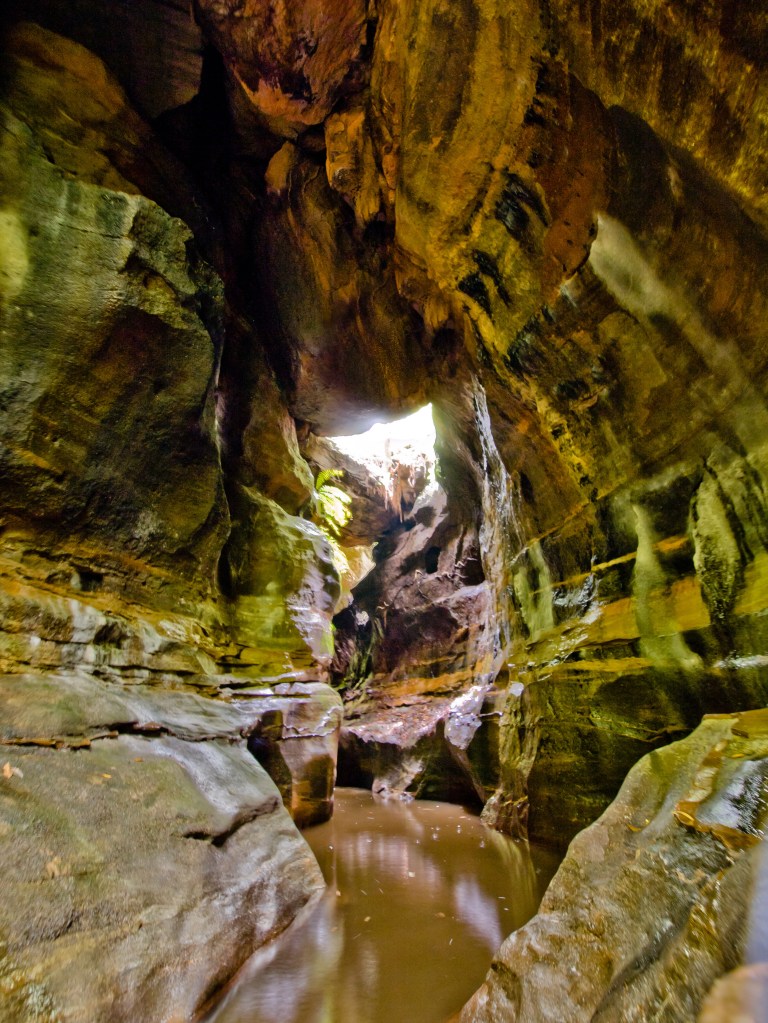
They may require long stretches of swimming, including through cave sections that resemble old cathedrals. Damp, smooth walls in some sections may not provide any rock features to hold onto to take a break.
It’s easy to become fatigued in the water, swimming with gear, through cold water and it’s important not to panic.
Flash flooding is a real threat in canyons, particularly where there are tight constrictions where water can rise quickly.
It’s ill-advised going canyoning if there has been rain, or if rain is forecast. Even if there has been no local rain, the run off from distant showers can drain into common catchment areas and present risks.

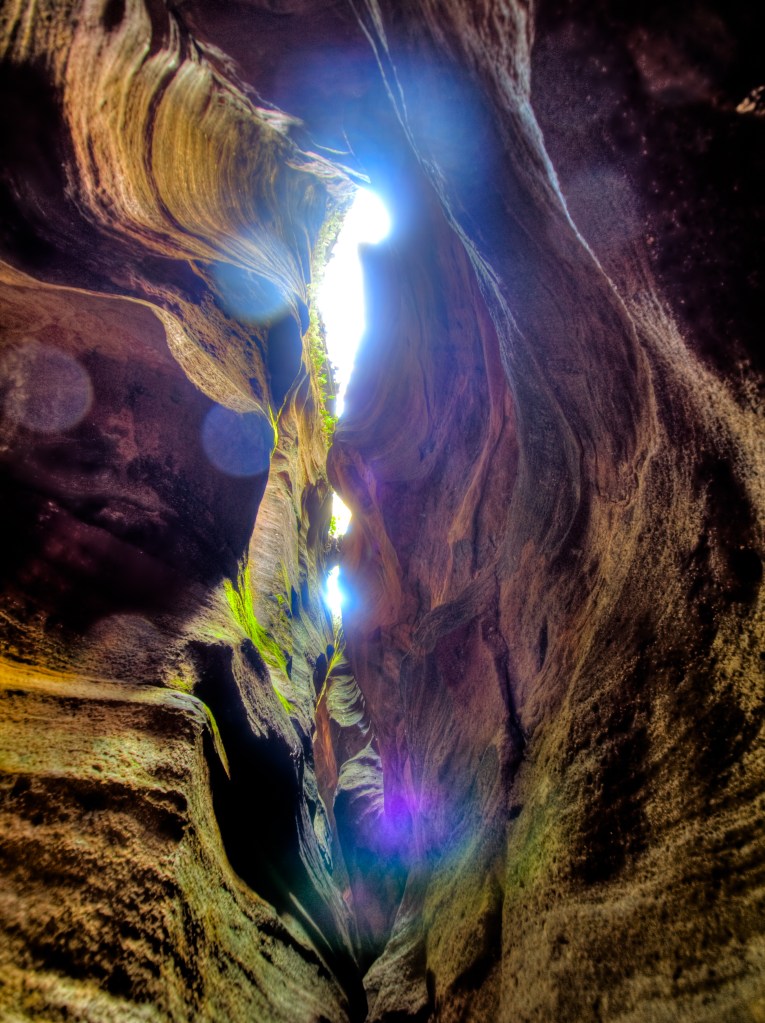
There’s just enough light sometimes to sustain an interesting ecosystem. We’ve seen snakes, water dragons, yabbies and on the odd occasion, the remains of creatures that have taken a tumble.
The sun rays can illuminate the mist, as it’s being carried by the breeze through twisting canyon sections. This light show is further enhanced as the scattered light, bounces off the mossy and fern filled walls above. It’s hard to describe, and even more difficult to capture and needs to be experienced!
Claustral Canyon, was named after its claustrophobic-inducing passages, and is regarded as one the most impressive canyons in Australia.
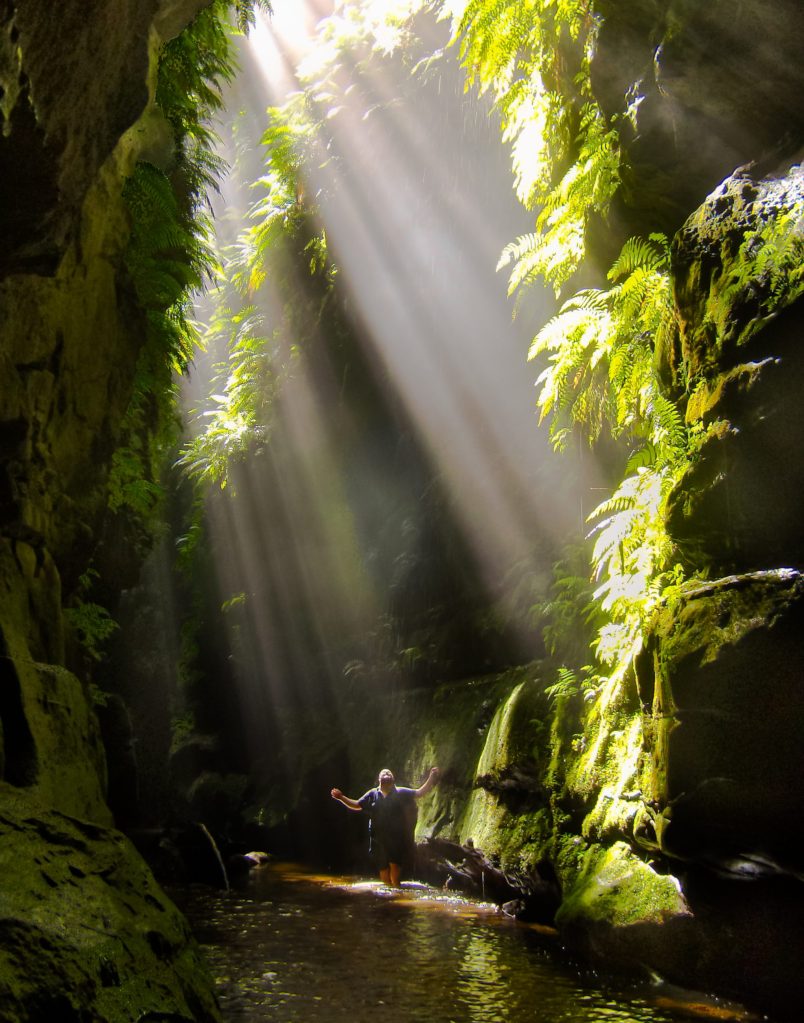

Credit: With much thanks to Neil aka Polar Bear and our canyoning gang for the lasting memories exploring the world beneath!
Thanks for visiting. These images were shot with a micro four-thirds Olympus DSLR from 2009-2010.
Canyons visited: Tiger Snake, Upper and Lower Bowens Creek, Claustral, Grand Canyon, Twister/Rocky Creek, Empress, Deep Pass, Serendipity, Fortress Creek, Wollangambe Creek.
You can learn more about how to visit the outdoors sustainably by following the 7 Principles of Leave No Trace.
 John Kha