
A field journal of our adventures bird watching and birding mostly in Australia.
This field journal contains:
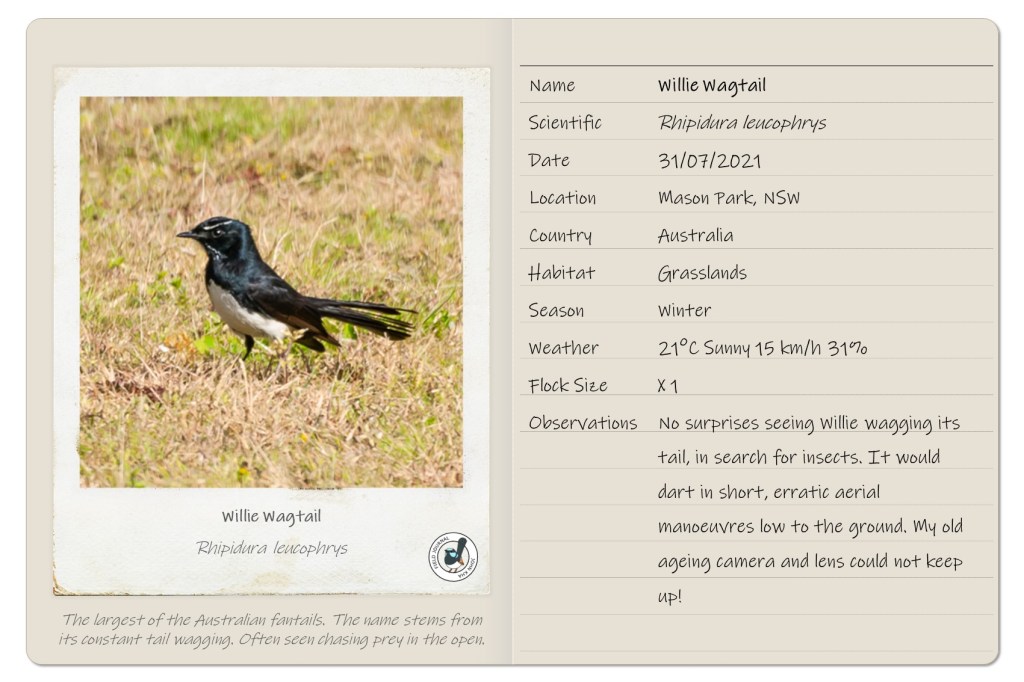
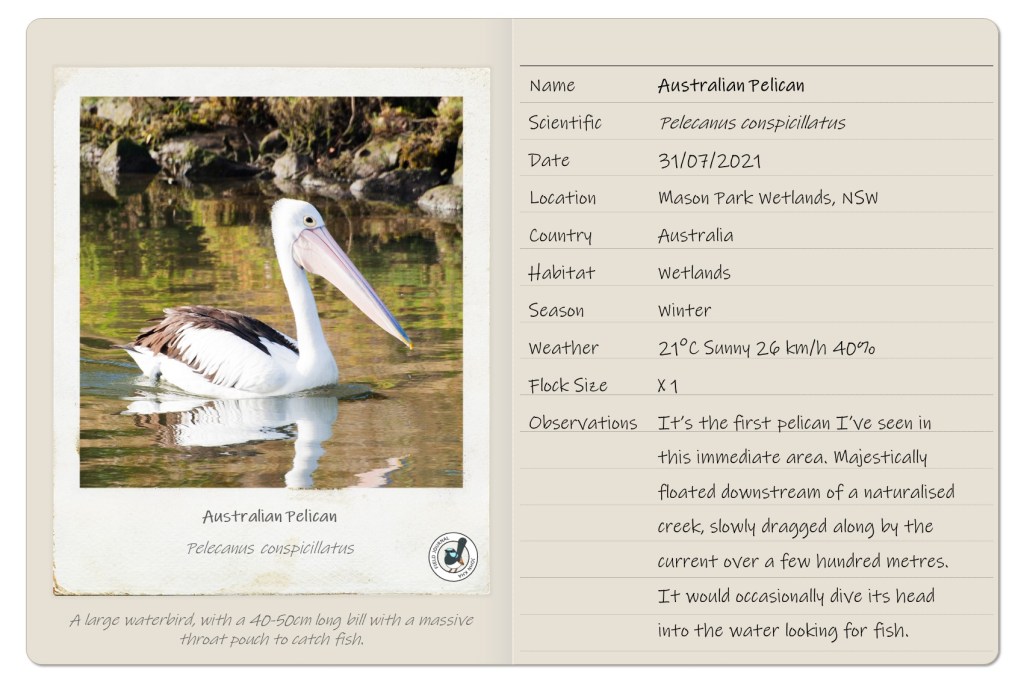
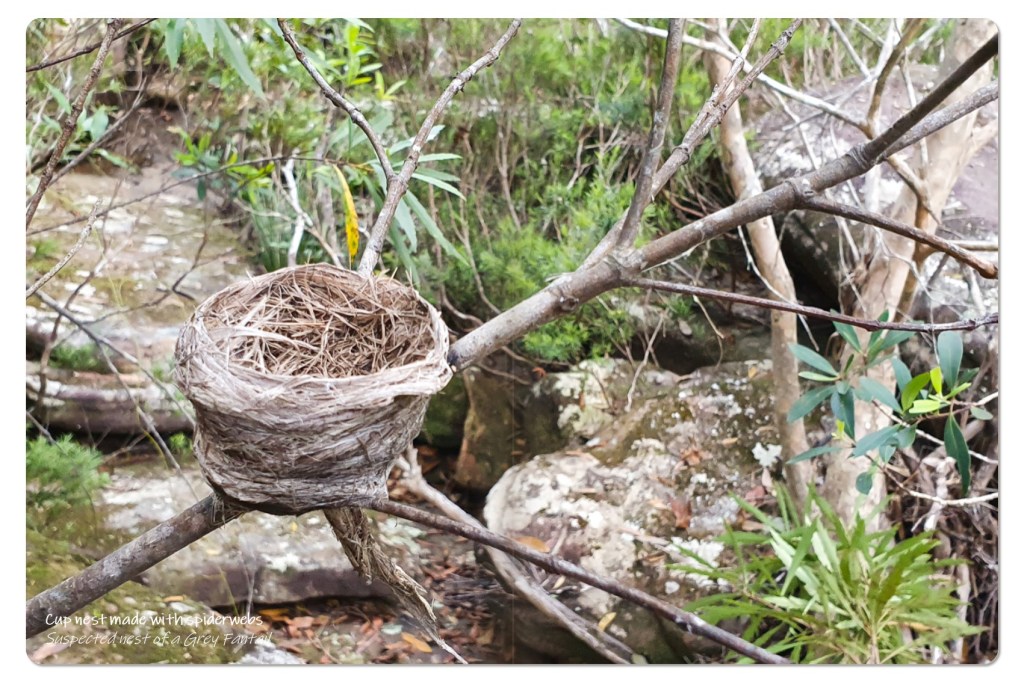
- Bird encounters and field notes
- Bird habitats and environments
- Photos and illustrations
- A list of all species observed in recent history
With unlimited pages in this journal, this will be an open-ended adventure at this stage! 🙂




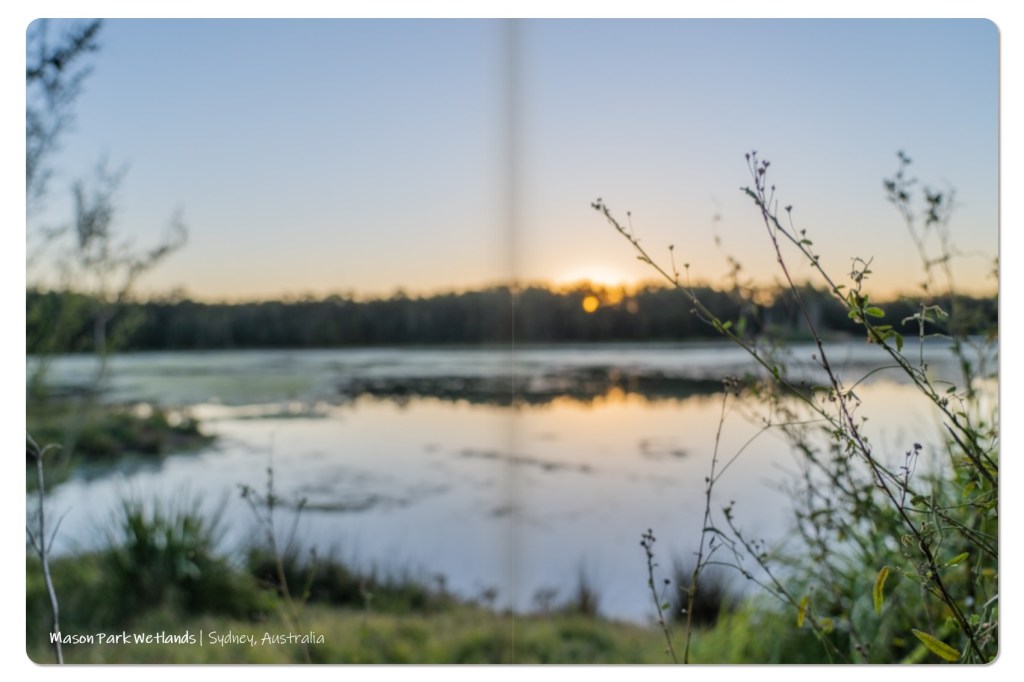

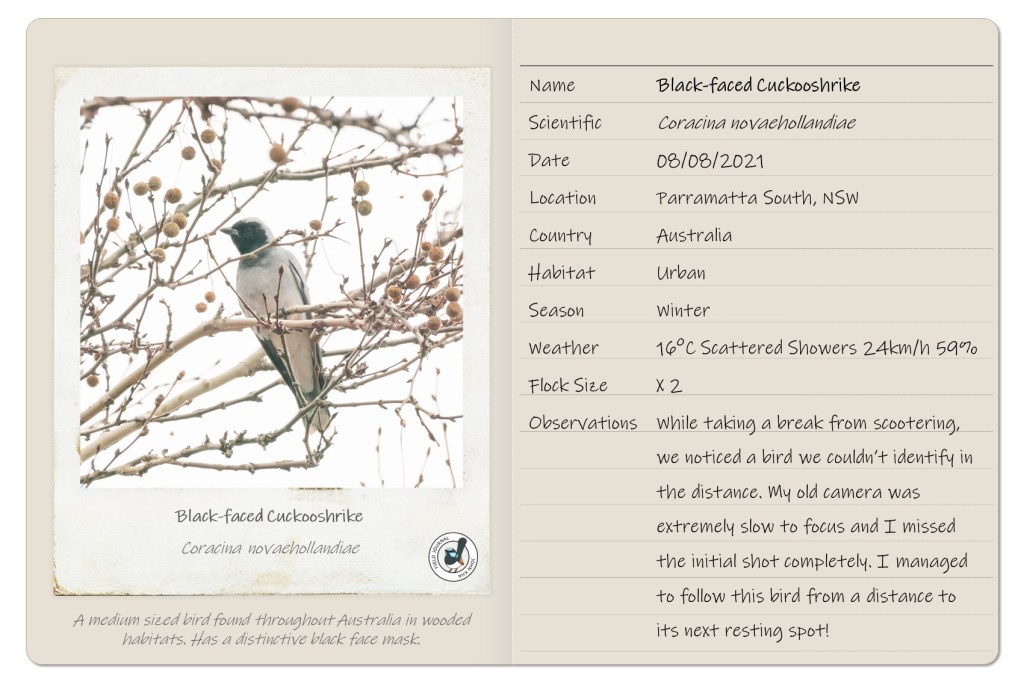
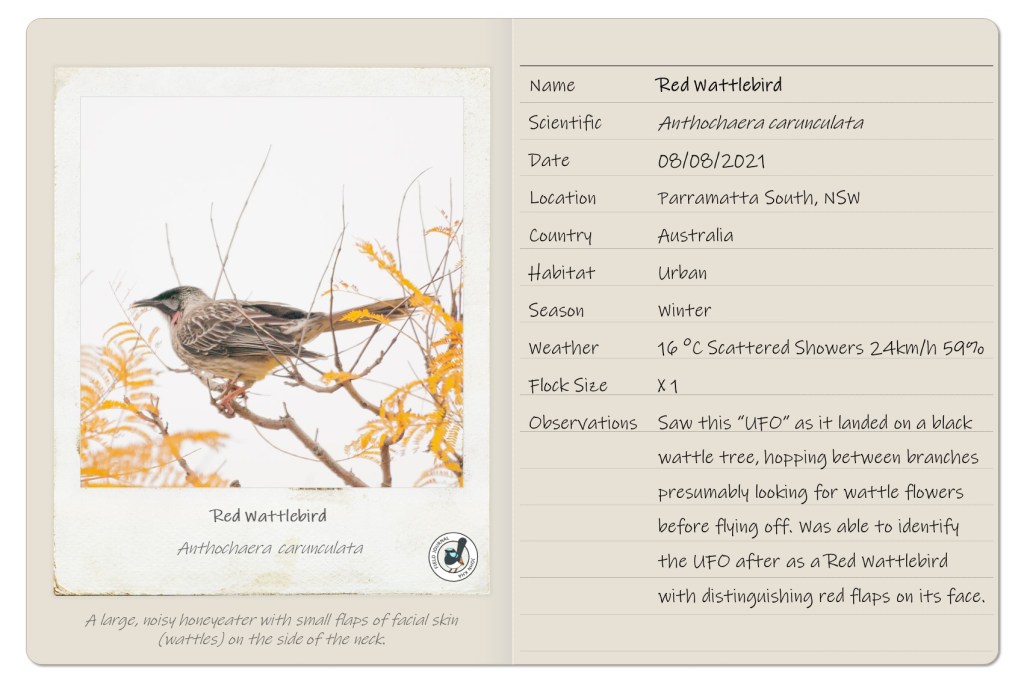
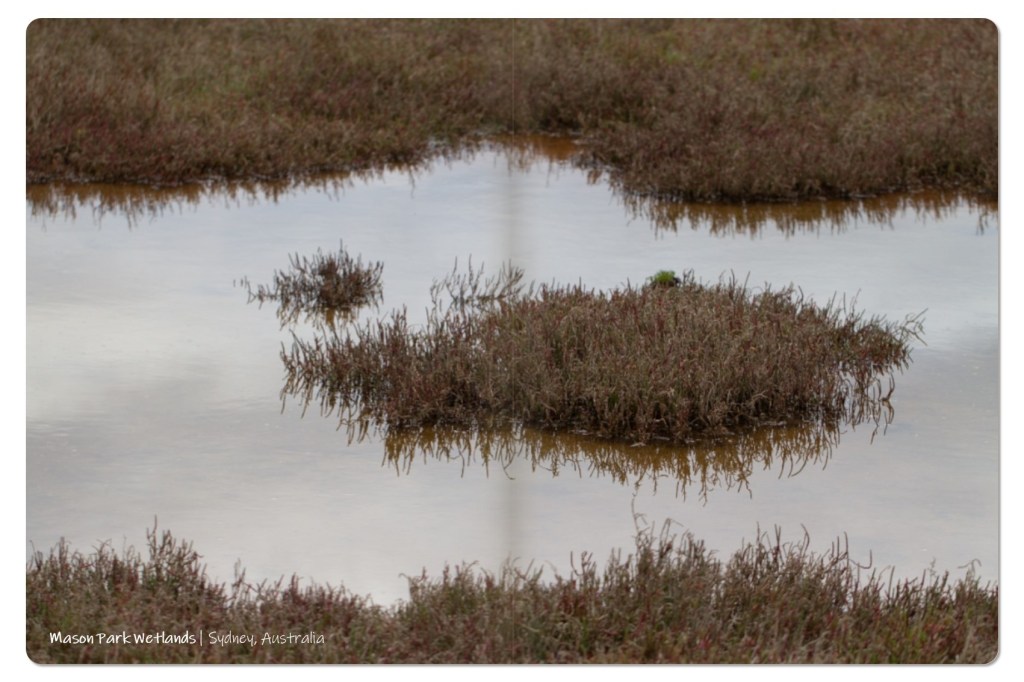


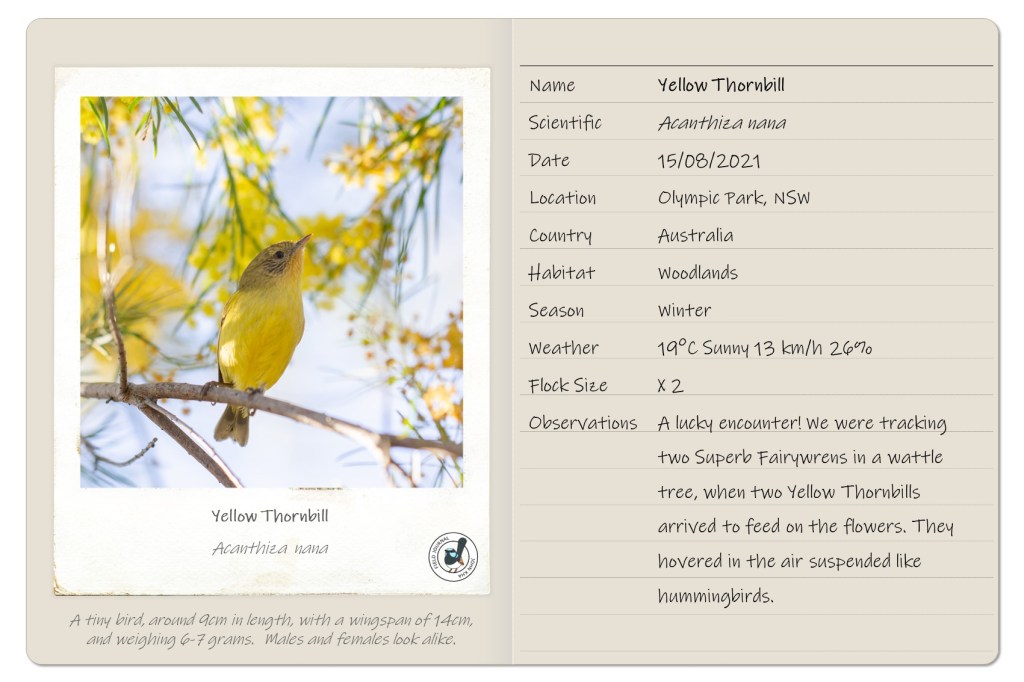


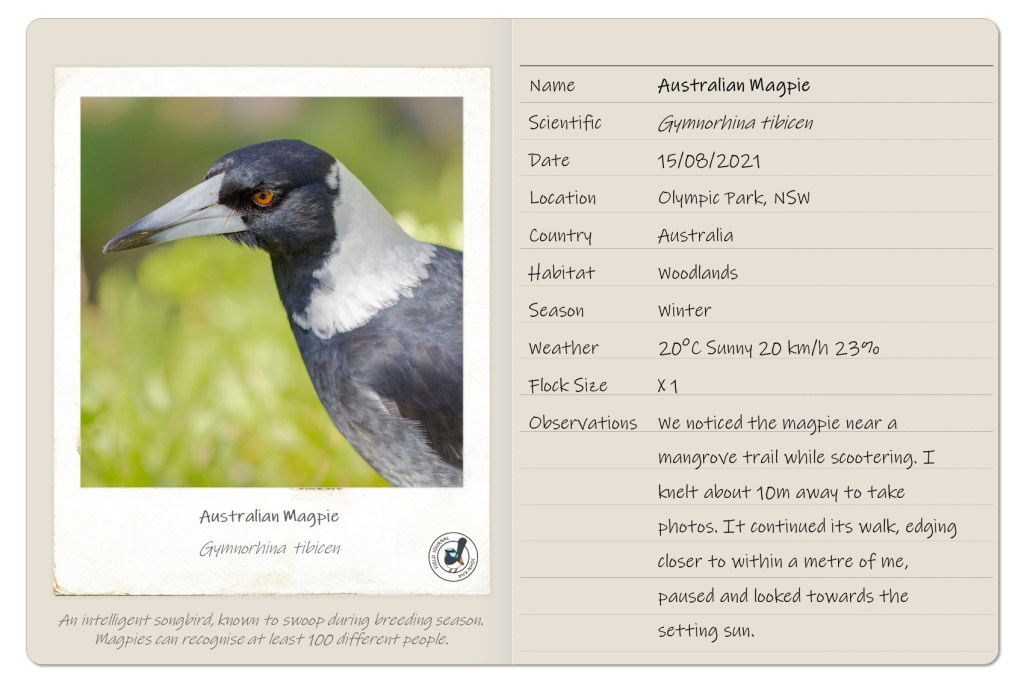


That’s all for now!
Thanks for visiting, if you enjoyed this field journal I’d love to hear your thoughts, please stay tuned as I add further pages to be the journal.
Interested in learning more? Scroll down further for more info on
- The making of this field journal
- Getting started in birdwatching and birding
About this journal
I first got into bird photography in 2007 not long after I purchased my first digital SLR camera with a super telephoto lens. I’d capture local urban birds in my backyard and admired them on bushwalks, however moved onto photographing other interests!
In 2021 with the chaos caused by the global pandemic, my wife and I have been spending our weekends actively exploring our local area while bird watching and “birding” – making notes of bird species, their abundance, habitats and trends and contributing findings to eBird, a global biodiversity-related science project anyone can take part in.
The making of this journal
I have always been an inconsistent journaler, jumping from different topic to topic, owning way too many notebooks left incomplete. This journal, Birding Adventures, came naturally as it intersects all my interests in journaling, nature, biodiversity, photography, art and journaling.
Tools I’m using to journal digitally listed in the general sequence that they are used:
- eBird: to capture observations
- Monocular 12×55 to help identify birds at a distance and key features
- Merlin: to help identify birds I’m unfamiliar with in the area
- Smart Phone: to capture large flocks of birds, to capture bird sounds and for mapping
- Camera and telephoto lens to capture birds from a distance to respect their space
- Adobe Lightroom: for photo editing
- Adobe Photoshop: for digital paintings, illustrations and general editing of graphics
- Wacom Intuos: for illustrating and painting birds using a tablet and stylus
- Inkscape: for vector illustrations
- PowerPoint: to organise my field journal and notes
Getting started in bird watching and “birding”
What’s the difference?! “Crudely put, bird-watchers look at birds; birders look for them.” (“The Difference Between Bird Watching and Birding“, The New Yorker, 2011)
The main apps on your mobile worth using:
- Merlin – Identify the birds you see or hear. There’s a free global bird guide with photos, sounds, maps, and plenty more. Created by The Cornell Lab of Ornithology. Great for bird watching.
- eBird – Keep track of your bird lists, photos, and sounds. Explore the latest sightings from around the world and is the largest birding community. Your observations contribute to science and conservation with data used by researchers.
Other equipment:
- Monocular – advantages are roughly half the size, weight and cost of binoculars
- Binocular – a more natural viewing experience, less tiring on the eyes, weighs more and typically costs more
- There’s numerous options for capturing birds, here’s a brief overview:
- Mobile phone: it’s better than nothing, although combining a mobile phone with a monocular can be done using an adaptor to allow you to “digiscope” and the image results can be quite good! Although it is quite fiddly and suited for slow or stationary birds.
- Bridging cameras: Cameras such as a Panasonic Lumix FZ80 are brilliant cameras with an incredible zoom that can extend well beyond more expensive DSLRs and mirrorless cameras. They are light, affordable and very portable with no need to swap out camera lenses.
- DSLRs and mirrorless cameras: Can be very expensive, although the results are fantastic. The camera and lens combination can be very heavy and when carrying binoculars and any other gear can greatly limit your mobility.
Some of the species I’ve observed in the wild, thanks to the eBird app!
 John Kha