
If you’re interested in learning more about how the film was made, I’ve compiled notes from the production, post-production process and field notes.
Making the short film
- Over 100 hours of field observations were made over a 5.5 month period. Most observations were made early in the early morning and late in the afternoon through to sunset.
- Over 20 hours of footage was captured, logged, reviewed, categorised, and compiled into the first rough cut of the film, at 64 minutes in duration.
- The final version of the short film was condensed to under 17 minutes.
About the nest
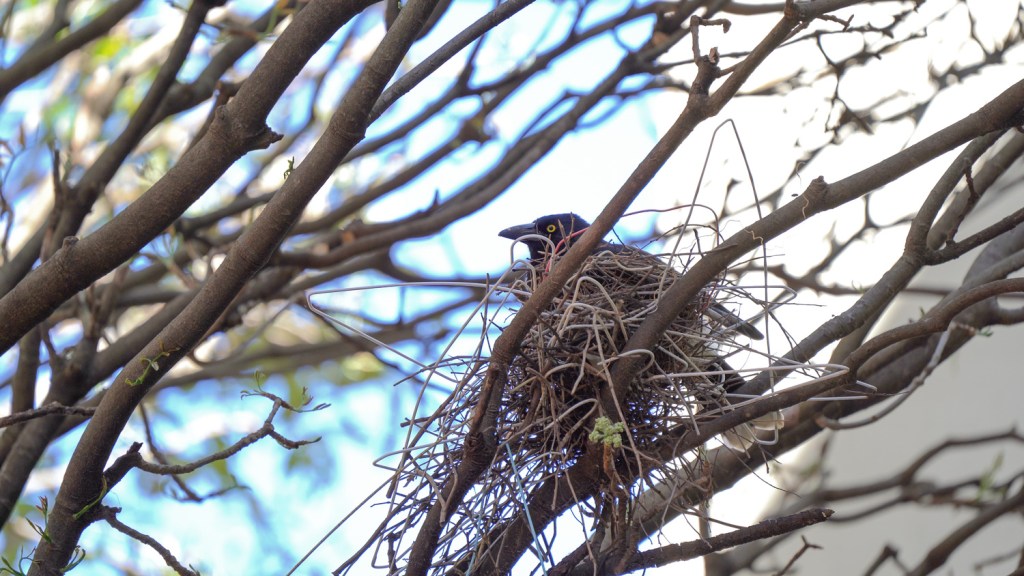
- The core of the nest was made of approximately two dozen, wire coat hangers!
- The currawongs had a preference for white coat hangers for the nesting material, or perhaps the original owners preferred white?
- The nest is also made up of electrical cables, and natural nesting materials such as dried twigs.
- The nest site selected was in a corridor between two buildings and whether intentionally or not, had maximum access to natural light from sunrise and sunset passing through this corridor. This was very ideal as it allowed me to use the gorgeous light from sunrise and sunset.
About the family of Pied Currawongs
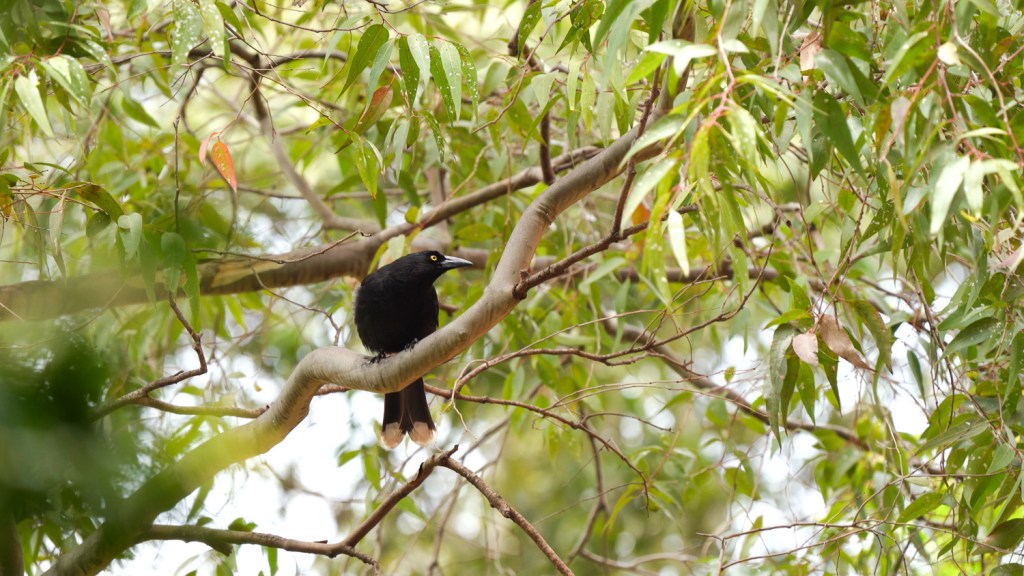
- The female Pied Currawong in the film can be identified by her shorter beak and less scruffy-looking facial feathers. The male Pied Currawong in the film can be identified by his longer beak, and his scruffy-looking facial feathers.
About the challenges they encountered
- Rain, wind and heat loss: Record rain was recorded through Nov-21 in Sydney with howling winds that I was certain would blow the nest away. Perhaps the metal construction served its purpose! During this period the rains were torrential and unrelenting as seen in the film, and caused stress for the currawongs trying to regulate the temperature of the eggs and the nestlings.
- Heat stress: In the scene with the young fledgling on the ground, it was a hot 32 degree celsius day (90 degrees Farenheight). The fledgling took cover under the shade and I lowered the bird bath to the ground level, and it instinctively hopped into the bird bath to drink.
- Unleashed cats: An unleashed cat without a bell, was seen roaming and prowling around below the nest, and along the fence line over a few days. This was very unsettling!
- The urban environment: The nest is situated between two buildings that generates sound pollution at all times of the day (squeeky garage door shutters, freight trains, planes overhead etc), and artificial lights at night. This disrupts their natural rhythm, such as sleep cycles.
Field notes captured on the behaviour of the family of Pied Currawongs
- Observing the wild birds helped me to understand their behaviours and to anticipate when to roll the camera.
- The currawong calls could typically be heard in the morning and at sunset. A call from one adult would be returned with a call from its mating pair.
the call of the pied currawong
This is an actual recording during production of the Pied Currawong while it was raining. The spacing between the calls are quite even, about 8 seconds apart. Rainbow Lorikeets can also be heard overhead as they escape the rain.
- The male currawong was very active in helping to feed the female currawong and the nestlings. On one particular day, I did not observe the female currawong for several hours and she returned late in the day.
- The female and male adult currawongs took turns feeding and guarding the nest. When one returned to the nest, the other would depart in a very coordinated style of feeding.
- What did they eat? I observed mainly a range of insects, berries and fruit. At one stage, the female currawong had somehow managed to procure an entire slice of raisin bread. While holding the slice of bread down with one foot, it fed two very excited juvenile currawongs.
- What are those white sacs? The white sacs being expelled from the nestlings are fecal sacs and act as tiny nappies. These are commonly expelled by the nestlings immediately after being fed, with the adult helping to remove the sac to keep the nest clean. When the nestlings were about to expel a sac, they would often shake their rear towards the sky. If an adult was around, they removed the sac and disposed of it away from the nest. As the nestlings grew larger, they were able to expel the sac over the edge of the nest without assistance.
- The adults frequently removed the white fluffy baby feathers of the nestlings to encourage new growth of feathers to prepare them for their next phase as fledglings. This often occurred after feeding events and would last for several minutes.
- Sleeping behaviour: The sleepy nestlings would often nod off while sitting or standing, as seen in the film. When sitting, they would rest their heads on the edge of the nest. Micro awakenings caused them to raise their heads suddenly, followed by a gentle fall back to the same position on the edge of the nest. When standing, the nestlings would often fall asleep with their wings tucked up high, and their heads slowly falling to their sides.
- After waking up from naps, the nestlings would stretch their wings behind their backs. As they grew older they also flapped their wings (often repeatedly in the face of the other nestling as seen in the film)

